Echoes of Time: What is DTW (Dynamic Time Warping) and How Should It Be Read?
EDITOR: Welcome back, Mr. Bold. The waters never seem to calm down at the Vortex Terminal. With the latest update, a very mysterious module has been added to the US Powerball, US Megamillions, EU EuroJackPot, EU EuroMillions, TR ÇılgınSayısal Loto terminals at vortex.axisbrief.com: “DTW TIME-SERIES MATCH (Top 10)”. This feature, which will soon be integrated into all lottery systems, is already the number one topic in the community. Everyone is asking the same question: What do these colorful boxes (like 2-2-1) and the percentages next to them, like %9 or %8, mean?
BOLD: It’s great to be back. We are thrilled to finally bring one of the system’s deepest algorithms to the user interface, into the light of day. Powerball has been a fantastic testing ground for us. Those boxes and percentages you see are actually the physical manifestation of DTW (Dynamic Time Warping)—one of data science’s most elegant algorithms—within the Vortex matrix.
EDITOR: Dynamic Time Warping… It sounds like a concept straight out of a sci-fi movie. How would you explain this in layman’s terms, without drowning in technical jargon?
BOLD: It does sound futuristic, but what it does is quite intuitive. Imagine saying a word very fast, and then saying that same word very slowly, syllable by syllable. The durations and speeds are different, but the “word” is the same. Computers (like voice assistants) understand that those two sounds are the same word despite the speed difference, thanks to the DTW algorithm. DTW stretches and bends time to find the “rhythm similarity” between two different time series.
EDITOR: So, what exactly does this “rhythm similarity” do in the Vortex matrix?
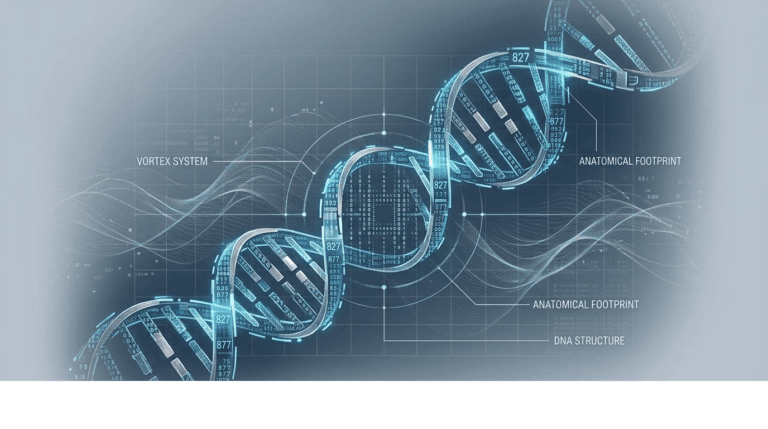
BOLD: In our previous session, we talked about “Trend Highways” moving constantly like ocean currents. In every draw, the matrix forms a DNA structure, a color sequence. Right at this second, the DTW module takes a snapshot of the matrix’s current state (the present) and dives into the massive historical database to ask: “Which periods in the past fluctuated with the exact same rhythm as today?”
EDITOR: So, are the %9 matches we see on the screen the similarity rate of a past period to today? What do the 2-2-1 boxes next to it represent?
BOLD: Exactly. Those percentages are “Echo Scores of the Past.” If a row says %9, the system has scanned the past 100 draws and found the period that most closely resembles today’s fluctuation (color and address transitions). The colorful boxes next to that percentage (for example, 2 Blue, 2 Green, 1 Orange) show the dominant DNA Formation of that similar period in the past. In short, the system tells you: “In past periods that most closely resembled today’s conditions, this DNA structure was dominant.”
EDITOR: Now for the most crucial question, Mr. Bold. 90% of the emails from our users ask this: “If today’s chart matches a past chart by %9, will the exact same numbers from the past be drawn? Can we use these percentages as a definitive prediction tool?”
BOLD: (Getting serious) This is an issue where we must draw very sharp lines. This is exactly our ethical and scientific boundary. I want all our users to engrave this in their minds: DTW is neither a time machine nor a crystal ball. Even if two periods match by 99%, it absolutely does not guarantee that the same balls will drop from the machine. The “Principle of Independent Events” we discussed last time is fully in effect here. History rhymes, but it does not repeat itself exactly.
EDITOR: In that case, how should our users integrate this powerful module into their strategies? What is the correct way to use it?
BOLD: They should think of the DTW module as a “Macro Climate Radar.” If you are building a strategy—for instance, saying “I will focus on the hot cities (the right side) today”—you can look at the DTW module to validate your thesis.
For example, you look at the DNA structures of the highest matches (Top 10) in the DTW list and see that most of them are cold (blue/ice) heavy DNAs (like 3-1-1). This whispers to you that in the matrix’s current “similar pasts,” a cold period was generally experienced; the ocean current is shifting that way. The user should use these echoes as a compass when determining their general game template and DNA limits, not for picking specific numbers.
EDITOR: So, DTW doesn’t tell us “Which numbers will be drawn,” but rather “Under which game rules the matrix is currently fluctuating.” And we shape our free picks according to these rules.
BOLD: A flawless summary. Knowledge is power, but how you interpret that knowledge is strategy. The Vortex Terminal provides you with the direction of the ocean current, the strength of the wind, and where these winds blew in the past with millimeter precision through the DTW and Radar charts. How you adjust your sails and chart your course is entirely up to your analytical intelligence. Once our tests in Powerball are complete, we are eager to open this deep analytical infrastructure to all lottery games.
EDITOR: This has been a very enlightening conversation, Mr. Bold. Thank you for drawing the logic and boundaries of DTW so clearly.
BOLD: Thank you. I wish everyone analytical, enjoyable, and rational strategies. See you inside the matrix.
(To explore the DTW and other analytical tools offered by the Vortex Terminal, and to build your own data-driven strategies by reading the echoes of the past, you can log in to the system at vortex.axisbrief.com.)